A business card is often the first physical piece of your brand that a new contact holds. In Dubai, where business is done at exhibitions, majlis meetings, site visits and coffee catch-ups across the city, that small card quietly signals how professional your company is. The good news: choosing the right card is not complicated once you know the few decisions that matter — size, paper, finish and design. This guide walks through each one.
Start with the standard size used in the UAE
The most widely used business card size in the UAE and internationally is 85 × 55 mm. It fits wallets, card holders and the card slots in exhibition lanyard pouches, and every printer's templates are built around it. Some companies choose the slightly narrower American size (89 × 51 mm) or square and mini formats for a distinctive look. Unusual sizes can be memorable, but check the practical side first: a card that does not fit a wallet tends to be discarded. If you are unsure, 85 × 55 mm is the safe, professional default.
Paper weight: what gsm actually means for your card
Paper thickness is described in gsm (grams per square metre). As a general guide:
- Around 300 gsm — a standard, flexible card. Fine for high-volume handouts at events.
- Around 350 gsm — noticeably firmer; the most popular middle ground for everyday business use.
- 400 gsm and above — thick, rigid cards that feel substantial and suit premium positioning, senior roles and client-facing brands.
Thicker is not automatically better — it depends on how the card will be used. A sales team handing out hundreds of cards at a trade fair may prefer a lighter stock, while a consultancy or real-estate brand meeting clients one-to-one often chooses thickness as part of the impression. Availability of specific stocks depends on the project, so confirm the options when you request a quotation.

Finishes that change how the card feels
The finish is the surface treatment applied after printing, and it has the biggest effect on how a card feels in the hand:
Matte lamination
A smooth, non-reflective coating that protects the card and gives colours a calm, modern look. A safe choice for corporate and professional services brands.
Gloss lamination
Adds shine and makes colours and photography pop. Works well for food, beauty, retail and event brands with strong imagery.
Velvet (soft-touch) lamination
A suede-like matte finish that feels premium the moment someone picks the card up. Popular for luxury, hospitality and boutique brands.
Spot UV, foil and embossing
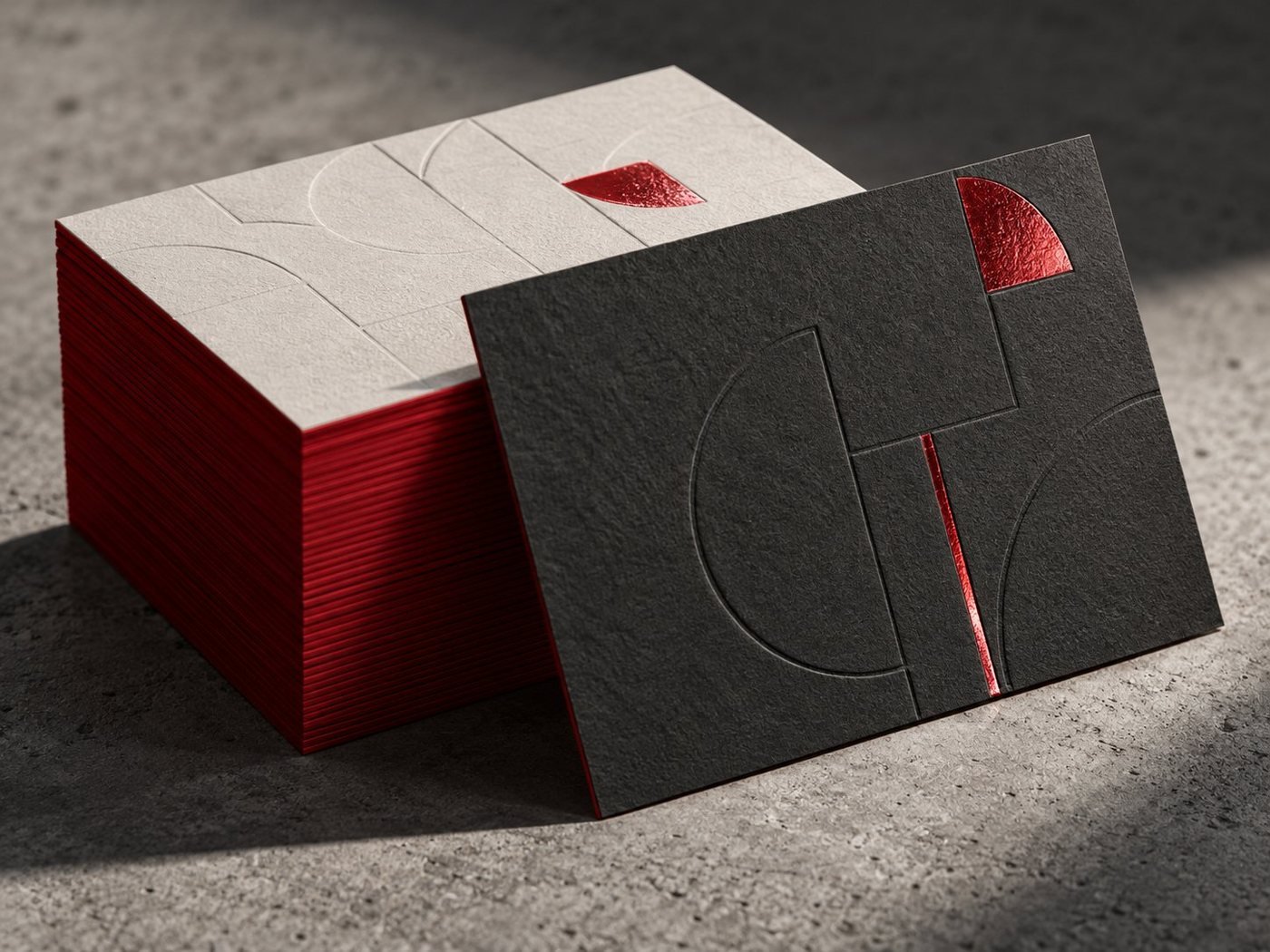
These are accent finishes: spot UV adds gloss to selected areas only (a logo, for example), metallic foil adds a reflective gold, silver or copper element, and embossing raises part of the design so it can be felt. Used sparingly, they make one element of the card unforgettable. Rounded corners and coloured edges are further options on some stocks.
Which finishes are available depends on the paper stock and quantity you choose, so it is worth describing the effect you want and letting your printer recommend the combination that achieves it.
Design essentials: what to put on the card
A well-designed card carries only what a contact needs:
- Your logo, used at a size where it stays sharp and recognisable.
- Name and job title — the two lines people look for first.
- Mobile number and email — in the UAE, the mobile number matters most, because most follow-up happens on WhatsApp.
- Website and location — your domain, and your area or emirate (for example, Deira, Dubai) rather than a long address.
- A QR code (optional) linking to your website, WhatsApp chat or digital contact card — useful at exhibitions where people scan rather than type.
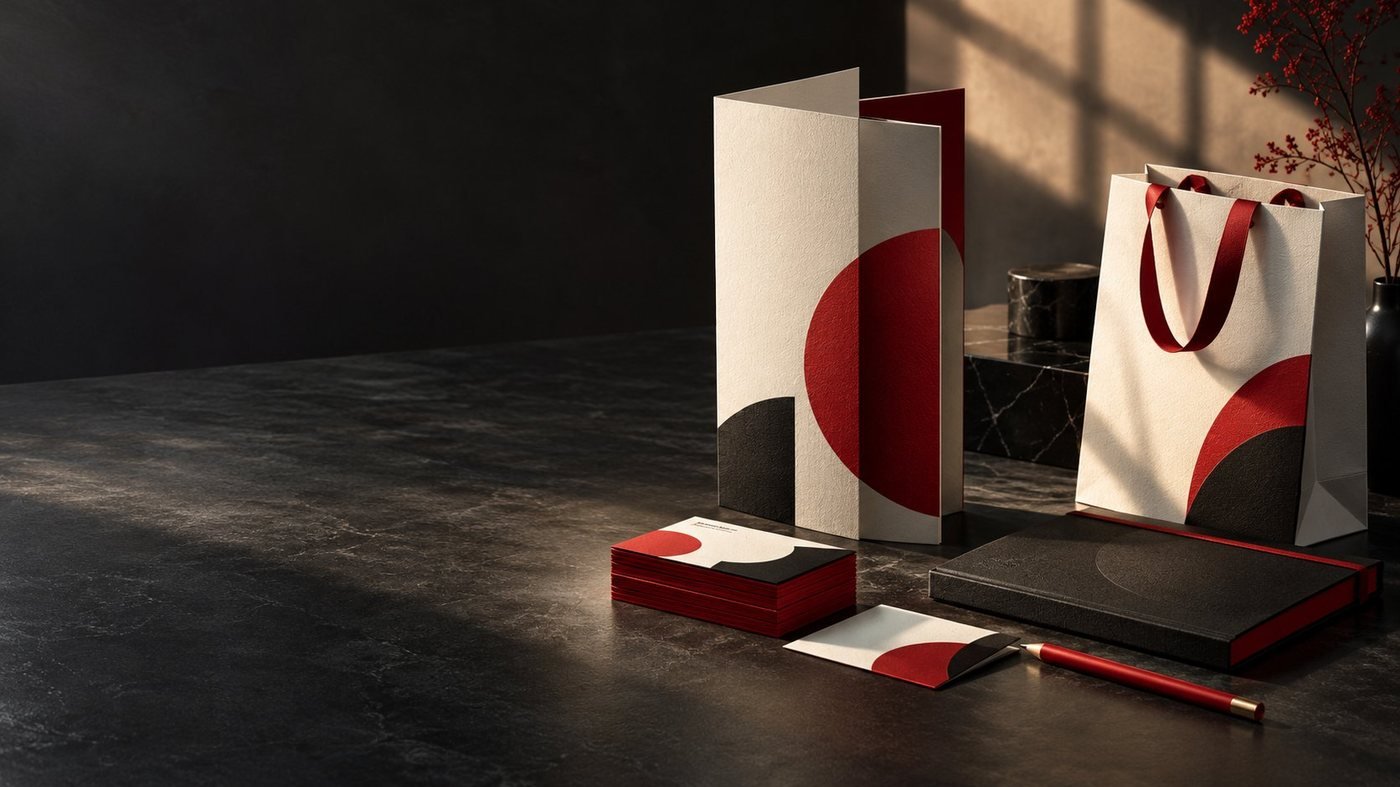
Keep the layout uncluttered, use your brand colours and fonts consistently with your other materials, and leave the back of the card working too — many Dubai businesses print a services list, a second language (Arabic/English cards are common here), or a clean logo panel on the reverse. If you do not have print-ready artwork, a design studio can lay the card out for you; our graphic design services cover business cards as part of complete stationery sets.
How many should you order?
Order for how the cards will actually be used. A founder networking weekly and attending exhibitions will go through cards far faster than an office-based team. Ordering a larger run at once usually works out more economical per card than several small reprints, but avoid over-ordering if your phone number, title or office location may change soon — out-of-date cards help no one. A practical approach: a larger run of company cards with stable details, plus smaller runs for individuals whose details change.
A quick decision checklist
- Size: 85 × 55 mm unless you have a reason to differ.
- Paper: 350 gsm for everyday quality; thicker for a premium feel.
- Finish: matte for corporate calm, velvet or foil accents for premium brands.
- Content: logo, name, title, mobile, email, website — nothing more.
- Artwork: print-ready PDF with bleed, or ask for design support.
When you are ready, browse our business card printing options, add them to your Quote List, and send one request — specifications and artwork are confirmed with you before production, because the right combination depends on your design and quantity.
Have a project in mind?
Tell us what you are planning — specifications, materials and artwork are confirmed with you before production, because every project is different.